
Growth met with low builder confidence plus low buyer demand on rising interest rates and economic pressures
RICHMOND, VA (NOV. 16, 2026) — Virginia localities issued permits for 10,235 new housing units during the third quarter of 2026, an increase of 43.8% compared with the same period last year, according to the latest U.S. Census Bureau data compiled by the Home Builders Association of Virginia (HBAV).
The increase was driven primarily by multifamily development, although single-family permitting also posted year-over-year gains.
- Overall permitting increased 43.8%, from 7,120 units in the third quarter of 2025 to 10,235 in 2026.
- Builders pulled 5,668 single-family permits, an 8.7% increase compared with the same quarter last year.
- Builders secured 4,567 multifamily permits, up 139.6% from the third quarter of 2025.
“The third-quarter figures demonstrate that Virginia’s home building industry continues working to expand housing opportunities, even as builders face significant economic challenges,” said Craig Toalson, CEO of the Home Builders Association of Virginia. “The sharp increase in multifamily permitting is especially notable, but growth in both housing categories is encouraging. Virginia needs a broad range of housing options, and these figures show continued investment in meeting that demand.”
A housing market in transition
Stronger permitting suggests continued investment in Virginia’s future housing supply, particularly in multifamily communities. At the same time, slower home sales, higher mortgage rates, and declining builder confidence indicate that the broader market remains sensitive to affordability pressures.
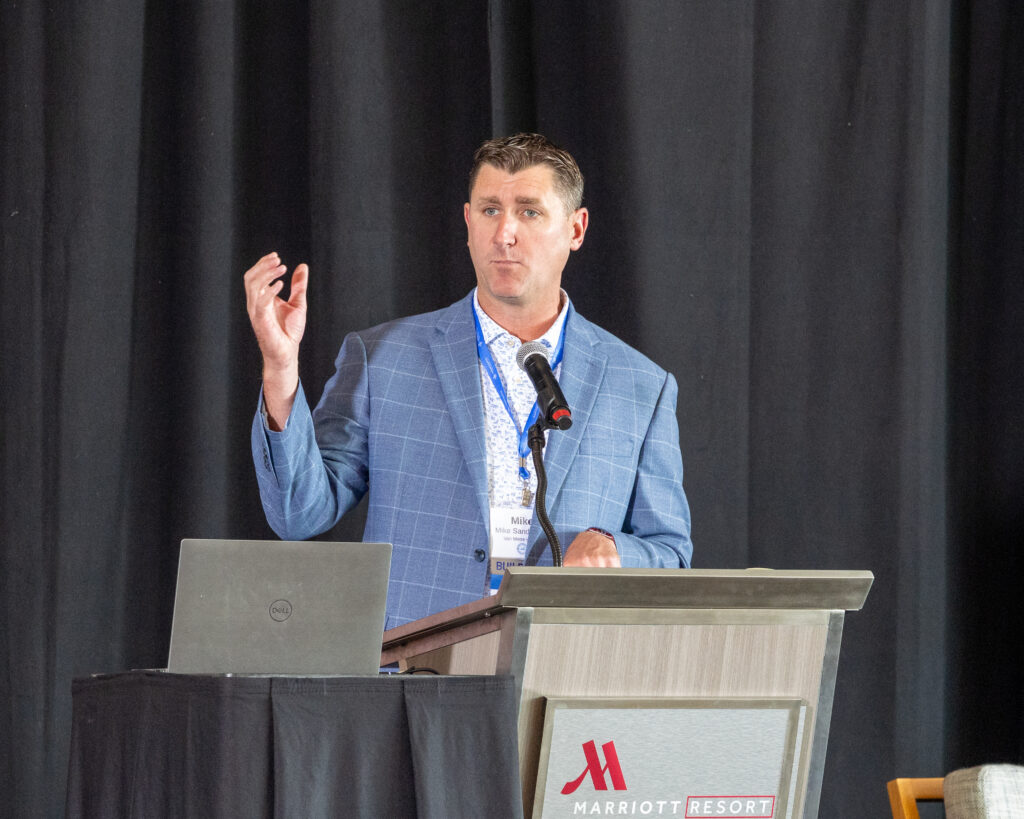
“Virginia’s housing market is sending two important signals,” said Mike Sandkuhler, HBAV president and executive vice president at The Christopher Companies in Oakton. “Builders are pursuing new housing opportunities, particularly in multifamily development, but higher mortgage rates and construction costs are making it harder to translate demand into affordable homes. Sustained progress will require policies that support responsible growth, streamline the development process, and reduce unnecessary costs.”
Multifamily permitting accounted for approximately 85% of the year-over-year increase in third-quarter permitted units. That concentration is important because larger apartment and condominium projects can produce substantial quarterly swings when permits are issued. While the figures demonstrate increased authorization of housing units, the growth should not be interpreted as evidence that construction activity or buyer demand has accelerated at the same rate, Sandkuhler noted.
In addition, HBAV’s Multifamily Housing Council of builders and industry partners notes approximately one-third of all multifamily permits never break ground due to financing challenges.
Year-to-date, Virginia localities have authorized 31,315 housing units through the first nine months of 2026, approximately 20.0% more than the 26,088 units recorded in HBAV’s corresponding 2025 reporting figures. Single-family permitting increased approximately 2.1%, while multifamily permitting climbed 48.3% (for permitting purposes, multifamily housing includes structures with two or more units).
Looking at Virginia and national trends
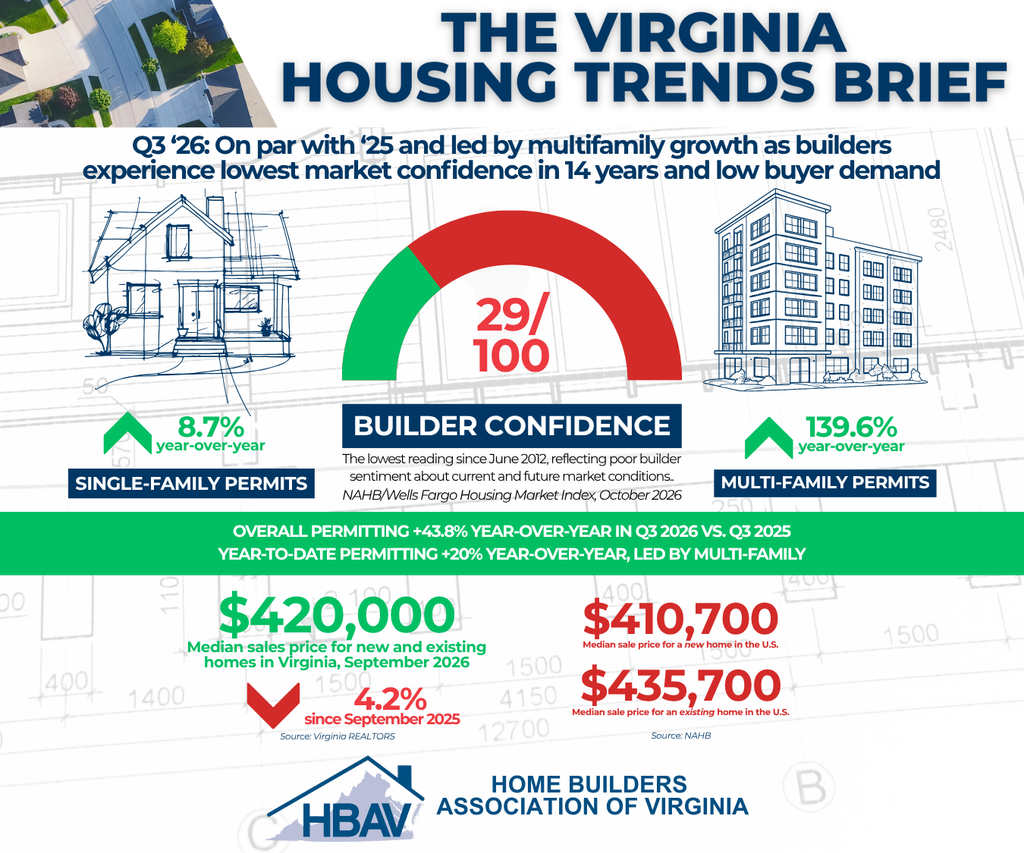
The third-quarter 2026 edition of HBAV’s Virginia Housing Trends Brief examines permitting activity, housing starts, home sales, mortgage rates, and builder confidence across the Commonwealth.
Nationally, builder confidence has deteriorated as mortgage rates and construction costs remain elevated. The NAHB/Wells Fargo Housing Market Index declined to 29 in October, its lowest reading since June 2012. On a scale of 100, readings below 50 indicate that more builders view market conditions as poor than good. The October survey also found that 43% of builders reduced home prices, while 65% continued offering buyer incentives.
The contrast between Virginia’s permitting growth and weaker national builder sentiment underscores the complexity of the housing market. Permits indicate planned residential development, but they do not guarantee that construction will begin immediately, and larger multifamily developments can also cause substantial fluctuations in quarterly permitting totals.
Additional Takeaways
Housing starts: Permitting measures authorization for future construction. But housing starts track when construction actually begins. Nationally, housing starts declined 5.2% in September to a seasonally adjusted annual rate of 1.22 million units, according to U.S. Census Bureau data compiled by NAHB. However, the South region, which includes Virginia, recorded a 6.1% increase in housing starts during the month, even as starts declined in the Midwest and West. The regional increase suggests construction activity remained more resilient in the South region. HBAV’s earlier Virginia-specific NAHB forecast projected approximately 30,500 housing starts for 2026.
Home sales and prices: Virginia’s resale housing market cooled toward the end of the third quarter. According to Virginia REALTORS®, there were 8,410 closed sales statewide in September, a 4.2% decrease from September 2025.
- The statewide median sales price was $420,000, unchanged from a year earlier.
- Meanwhile, active listings climbed 20.4% to 30,001 properties, giving buyers more choices as sales activity moderated. The combination of rising inventory and softer sales suggests the market is becoming less competitive for some buyers, although conditions vary considerably across Virginia’s regions.
Mortgage rates: According to Freddie Mac, the average 30-year fixed-rate mortgage reached 7.03% on September 24 and rose to 7.32% by October 22, compared with 6.19% a year earlier. Higher borrowing costs reduce purchasing power and can make it more difficult for prospective buyers to qualify for homes, even as additional inventory becomes available.
“For Virginia, the challenge remains converting planned development into completed homes across a range of price points and housing types,” said Andrew Clark, vice president of government affairs at HBAV. “Expanding housing opportunities will require continued investment alongside policies that improve predictability, address construction costs, and help make homeownership and rental housing more attainable.”
To see how these trends are playing out in specific metro areas, readers can explore the NAHB Metro Area Economic Dashboard.
About the Virginia Housing Trends Brief
Produced by the Home Builders Association of Virginia in partnership with the National Association of Home Builders (NAHB), the Virginia Housing Trends Brief offers a snapshot of the state’s housing market.
The update draws on trusted NAHB data — including builder sentiment, housing starts, permits, pricing, and mortgage activity — to highlight trends shaping single-family, multifamily, and remodeling activity across the Commonwealth.
About the Home Builders Association of Virginia
The Home Builders Association of Virginia (HBAV) was founded in 1956 to promote and protect the Virginia housing industry. HBAV is a member of the 3-in-1 Home Builders Association Federation that includes the National Association of Home Builders (NAHB) and 13 local Home Builders Associations in Virginia. HBAV serves the home building, development, and remodeling industry through advocacy, industry news and education, and membership events such as the Virginia Builders Summit & Expo and the Virginia Housing Excellence Awards.
MEDIA CONTACT
Daniel Carrigan, for HBAV
[email protected]
(717) 201-6911