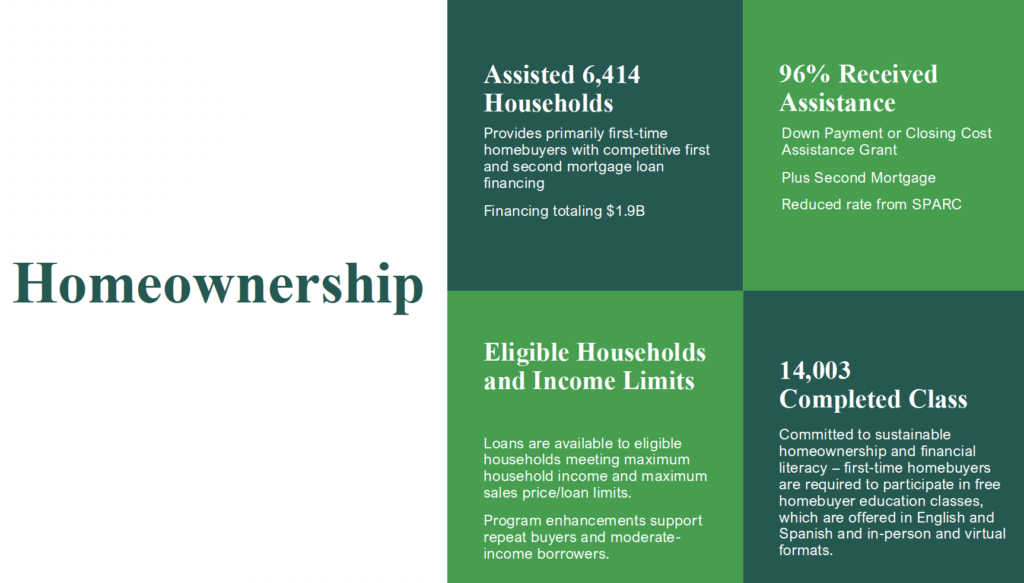
Virginia Housing helped 6,414 households purchase homes during its most recent fiscal year, providing $1.9 billion in financing, while its 2025 rental housing tax credit awards supported the creation or preservation of 5,500 homes.
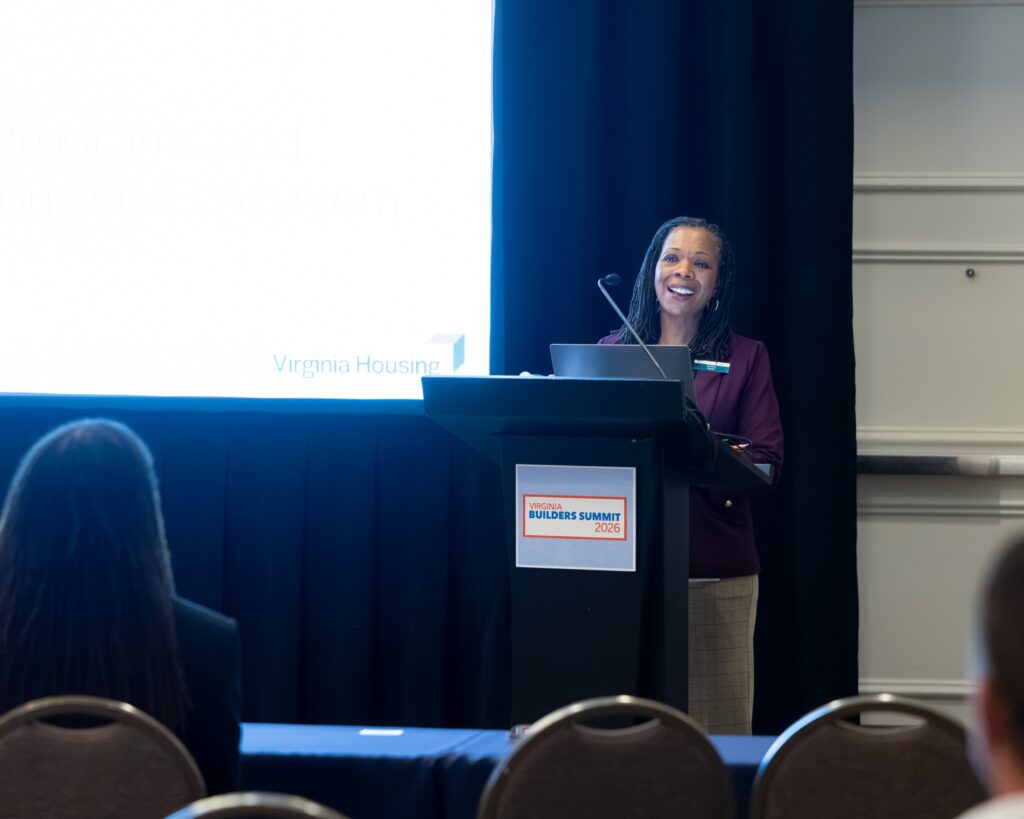
At the Sept. 29 Virginia Builders Summit, Virginia Housing representatives explained the programs behind those results and the organization’s expanding work on housing supply, preservation, and policy.
“At this point in the game, we need all kinds of housing, all types of housing, all price points,” CEO Tammy Neale told attendees.
Helping buyers cover upfront costs
Of the households assisted during the fiscal year ending in June, 96% received grants, second-mortgage financing, or reduced interest rates through the organization whose mission is to eliminate the affordable housing crisis.
Its down payment and closing cost grants help eligible buyers cover expenses that can prevent a purchase, even when a household can afford the monthly payment. The grants require neither repayment nor a minimum period of ownership. Virginia Housing’s Plus Second Mortgage offers another option: a second loan, repaid over 30 years, that helps finance upfront costs. It can serve eligible buyers whose incomes exceed grant limits but who still struggle to save enough to purchase a home, said director of homeownership lending Jake Naugle.
SPARC: Lowering the mortgage rate
SPARC — Sponsoring Partnerships and Revitalizing Communities — provides reduced-rate mortgage funding through local governments, nonprofits and housing partners. Participating sponsors connect eligible buyers with financing that lowers their interest rate and monthly borrowing costs.
Naugle said Virginia Housing plans to shift SPARC’s funding schedule to the calendar year beginning in January. Previously, funding was often depleted before the spring buying season.
Preparing buyers for ownership
First-time buyers using Virginia Housing loans must complete free homebuyer education. Classes cover purchasing and maintaining a home, as well as responding to financial difficulties. They are available in English and Spanish, both in person and virtually.

“We don’t just want to get the home buyer in the door and move on to the next one,” Naugle said. “We want to make sure that we’ve set them up for success.”
Attracting investment in rental housing
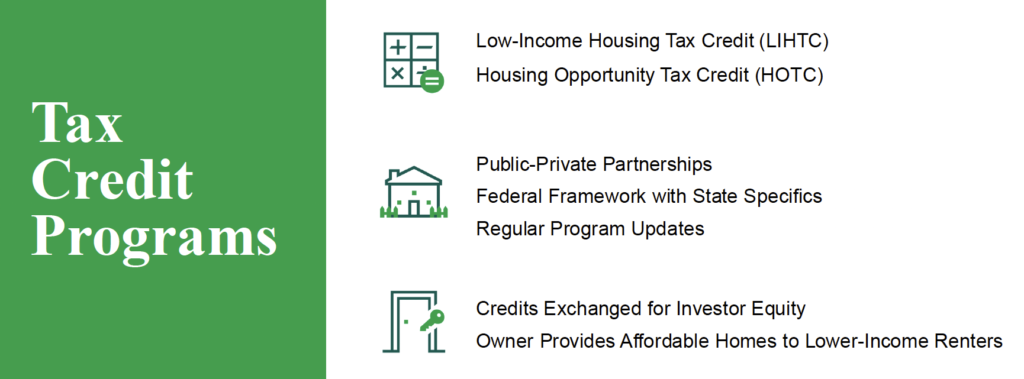
The federal Low-Income Housing Tax Credit and state Housing Opportunity Tax Credit help developers finance affordable rental homes.
Developers exchange credits for investor equity, reducing the debt a project must carry. The programs can support apartments, townhomes, duplexes and single-family rental homes.
Virginia Housing awarded $99 million in credits in 2025, generating more than $860 million in private investment to 5,000 units across 65 projects.
Phil Cunningham, assistant director of tax credit programs, said the developments also create opportunities for builders, subcontractors, and suppliers.
“We’re doing production when times are good,” Cunningham said. “When times are not as good, the need for affordable housing is always there.”
Addressing supply and preserving existing homes
Virginia Housing’s policy work increasingly addresses shortages affecting middle-income households as well as lower-income residents, said Fabrizio Fasulo, director of policy and planning.
The organization is contributing to the Commission on Unlocking Housing Production and examining changes to regulations, financing processes and development programs. It is also helping local partners preserve affordable rental properties as existing affordability requirements approach expiration.
A housing gap analysis with Virginia Tech’s Center for Housing Research will identify shortages by income, location and whether households rent or own. Results are expected in summer or fall 2027.
Fasulo pointed to Kentucky, where a similar study helped shift local discussions. “You ditch the conversations on whether you have a problem or not, and you start talking about solutions,” Fasulo said.
Neale also noted a distinction between Virginia Housing’s role and that of the builders in the room.
“Our focus is, ‘How can we help make homes as affordable as possible?’,” she said. She encouraged attendees to take what they learned back to their workplaces and consider where they could influence housing decisions, generate more supply or introduce new ideas.
“I hope you think about where you have a circle of influence,” Neale said. “Each of us have that. It doesn’t matter who you work for, your title…where can you make a difference is to generate more supply, to share innovative ideas, to raise your hand and say, “Yep, there might be a better way to do something,’ and collectively we can figure out how to bring down the cost of housing across the board or at least influence those people that make those decisions.”